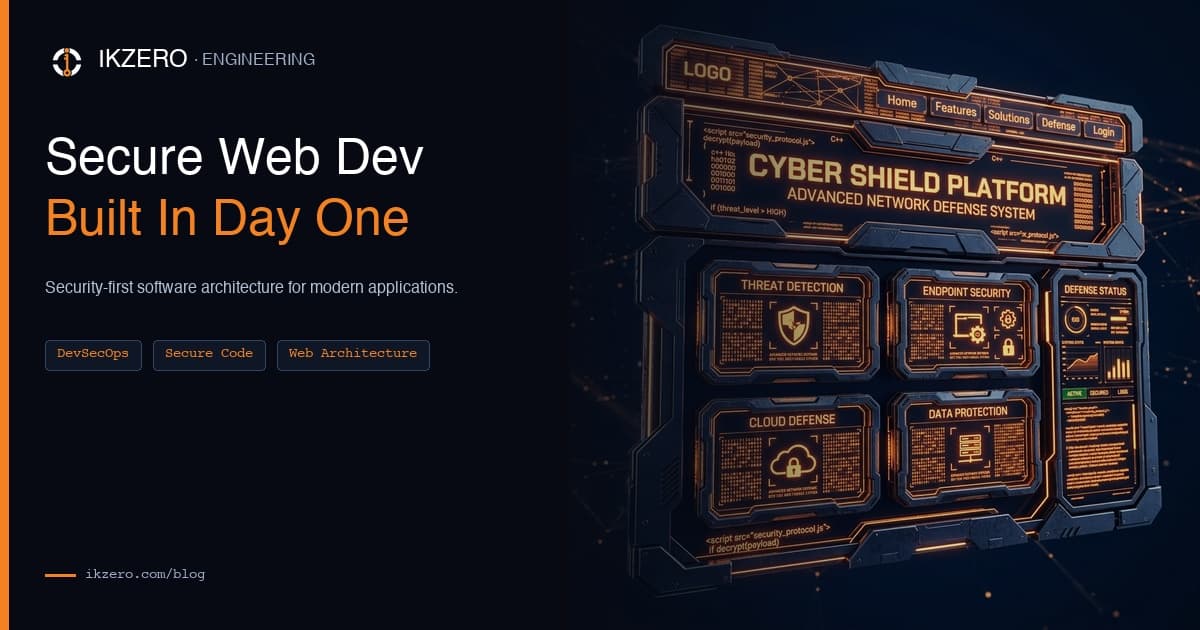
Most websites are built to look good and load fast. Security is treated as something to "add later", if it's considered at all. That gap is exactly what attackers count on. Secure web development flips the model: protection is designed into the site from the very first line of code, not bolted on after launch.
In this guide we'll explain what secure web development actually means, why it matters for your business, and what to look for in a development partner.
Secure web development, defined
Secure web development is the practice of building websites and web applications with security designed in at every stage: planning, coding, configuration, testing, and maintenance. Instead of shipping a site and hoping it holds up, a security-first team:
- Writes code to secure-coding standards that prevent common vulnerabilities
- Hardens server, CMS, and framework configurations
- Scans dependencies and third-party plugins for known flaws
- Penetration-tests the finished build before it goes live
- Keeps the site patched and monitored after launch
The result is a site that's resilient by design, not one that becomes next quarter's breach headline.
Why it matters more than ever
Your website is now your most exposed asset. It's public by definition, connected to your data, and often to your customers' payment details. A single vulnerability can lead to data theft, defacement, SEO-destroying malware injections, or a ransomware foothold.
The business cost goes well beyond the breach itself: lost customer trust, operational downtime, emergency remediation fees, and the search-ranking damage that follows when Google flags a compromised site. Building securely up front is dramatically cheaper than cleaning up afterward.
The hidden risks in "normal" web development
Three patterns cause the majority of website compromises:
Outdated or unvetted components. A single vulnerable WordPress plugin or npm package can expose the whole site. Secure development means auditing and monitoring every dependency.
Insecure coding patterns. SQL injection, cross-site scripting (XSS), and broken access controls remain the most exploited issues on the web, and they're almost always preventable with secure coding and review.
Weak configuration. Default settings, exposed admin panels, missing security headers, and over-permissive file permissions hand attackers easy wins. Hardening closes those doors.
What a security-first build looks like
At ikzero, secure web development is delivered by the same people who break into applications for a living. Every site is architected by OSCP- and CISSP-certified engineers, penetration-tested against the OWASP Top 10 before launch, and built on hardened, performance-optimized foundations. For teams shipping continuously, we also integrate security directly into the pipeline through DevSecOps so every future change stays secure too.
Crucially, security and performance aren't a trade-off. Clean, well-structured code is both safer and faster, which is why a secure build also tends to score better on Core Web Vitals and SEO.
How to choose a secure web development partner
Ask any prospective agency:
- Do you penetration-test sites before launch?
- Who reviews the code, and what are their security credentials?
- How do you handle dependency and plugin vulnerabilities?
- What hardening and security headers do you apply by default?
- What does ongoing security maintenance include?
If the answers are vague, security was probably an afterthought.
Build it secure from the start
A beautiful website that gets breached isn't a bargain: it's a liability. Secure web development gives you the speed and polish you want with the protection your business actually needs.
Ready to build securely? Talk to an ikzero expert for a free consultation on your next website or web app.