The Threat Landscape Has Changed
Cyberattacks are no longer limited to large enterprises. Small businesses, startups, and mid-market companies get hit too, often precisely because attackers expect their defenses to be thinner. Ransomware groups are automating their attacks, AI-powered phishing campaigns are bypassing traditional email filters, and supply chain compromises are affecting organizations of every size.
If your business handles client data, processes payments, or operates online, you are a target. The question is not if you will be attacked, but when.
What Is a Penetration Test?
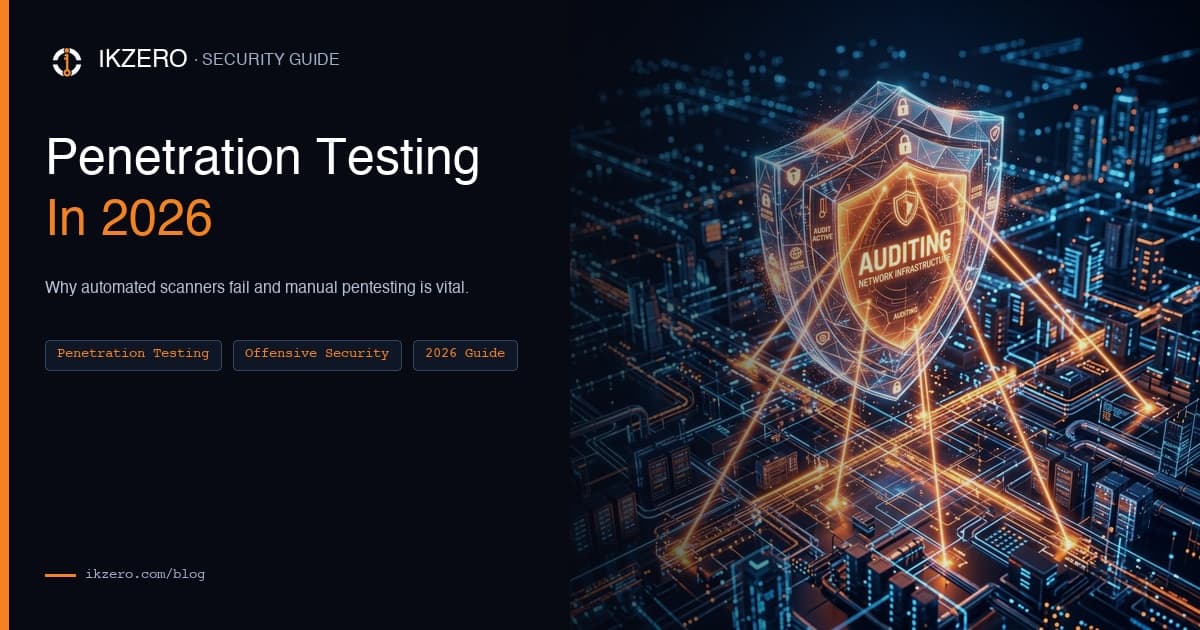
A penetration test is a controlled, simulated cyberattack against your systems. Unlike automated vulnerability scanners that simply list potential issues, a penetration test involves a skilled security professional actively attempting to exploit weaknesses, just like a real attacker would.
The goal is simple: find the vulnerabilities before criminals do, and fix them before they can be exploited.
Automated Scanners Are Not Enough
Many businesses rely solely on automated scanners and assume they are secure. Scanners miss critical issues only a human tester can find:
-
Business logic flaws: manipulating pricing, bypassing workflows, or escalating privileges
-
Chained vulnerabilities: combining multiple low-severity issues for high-impact compromise
-
Authentication bypasses: exploiting session management or OAuth errors
-
Social engineering vectors: identifying how attackers could manipulate employees
Where Compliance Comes Into It
Some frameworks require a penetration test outright. Others never use the words, but expect proof that you actually test your defenses. Here is where each one stands:
-
PCI DSS: If any part of your systems stores, processes, or transmits card data, the PCI Security Standards Council's own guidance is clear that penetration testing must be performed at least annually and after any significant change.
-
HIPAA: The Security Rule never says "penetration test". What it does require is an accurate and thorough risk analysis, plus a periodic technical and nontechnical evaluation of your safeguards. A pentest is one of the clearest ways to show you did the technical half properly.
-
SOC 2: Not written into the criteria, but enterprise clients and auditors routinely ask to see a recent test report before they sign.
-
ISO 27001: Same pattern. An ISMS is about managing technical vulnerabilities and showing your controls work; a pentest is a common way to produce that evidence.
-
CMMC: For the US defense supply chain, Level 3 is explicit: conduct penetration testing at least annually or when significant security changes are made. Levels 1 and 2 do not carry that requirement.
The Cost of a Breach vs. a Pentest
In their 2025 Cost of a Data Breach report, IBM and the Ponemon Institute put the global average cost of a data breach at $4.44 million, with the US average at a record $10.22 million. Closer to home, the same study put the Middle East average at SAR 27 million, based on organizations in Saudi Arabia and the UAE.
Those are averages across companies of every size. For a small business the number that matters is different: a breach arrives as lost customers, stalled operations, legal and notification costs, and a rebuild bill, all at the same time. And many never fully recover. A professional pentest costs a fraction of that and identifies the exact vulnerabilities attackers would exploit.
What a Professional Pentest Covers
-
External network testing: Internet-facing infrastructure assessment
-
Web application testing: OWASP Top 10 and beyond
-
API security testing: REST, GraphQL, and SOAP API flaws
-
Internal network testing: Simulating post-compromise lateral movement
-
Cloud configuration review: AWS, Azure, or GCP misconfigurations
How Often Should You Test?
At minimum, annually. More frequently after major updates, infrastructure changes, new product launches, security incidents, or when onboarding enterprise clients.
Take Action Now
Do not wait for a breach. A penetration test gives you a clear picture of your risk and a prioritized remediation roadmap.
Ready to test your defenses? Contact Ikzero for a scoping call with our OSCP-certified penetration testing team.